 29 Nov 2026
 6 min read
The hardest MTB trail in the UK has no universally agreed answer; Fort William’s downhill course is one candidate for highly technical riding, but its difficulty depends on the route, conditions and rider. The question “what is the hardest MTB trail in the UK?” is best answered by comparing the challenges a rider actually faces, not by treating one label as a definitive ranking.
What is the hardest MTB trail in the UK: what it means in practice
There is no single UK trail that can be named hardest for every rider; Fort William’s downhill course is a demanding candidate, but difficulty depends on the line, conditions and experience.
A trail’s reputation can be a useful starting point, not a substitute for checking what the ride involves. A course built for downhill racing may test speed, technical control and commitment in a different way from a long natural trail, where endurance, route-finding and changing ground may matter more.
The answer also depends on what “hardest” means to you. A rider confident on steep, technical descents may find a long day in remote terrain more taxing; another rider may find one exposed or rough section the main challenge. Comparing trails is most useful when you identify the type of difficulty you want to assess.
That distinction matters when comparing UK riding with mountain biking in the Atlas Mountains. The Atlas is a different riding environment, with high-mountain terrain and routes that may involve extended journeys between villages and changing elevations. A trail’s UK grade or reputation cannot be transferred directly to a route in Morocco.
For broader context on how riders define difficult trails, read what makes a trail the world’s hardest. The comparison is useful for understanding the criteria; it does not settle which UK trail is hardest.
What is the hardest MTB trail in the UK: the key factors
Difficulty is a combination of technical demands, physical effort, exposure and conditions, so the hardest trail for one rider may not be the hardest for another.
The core problem to understand
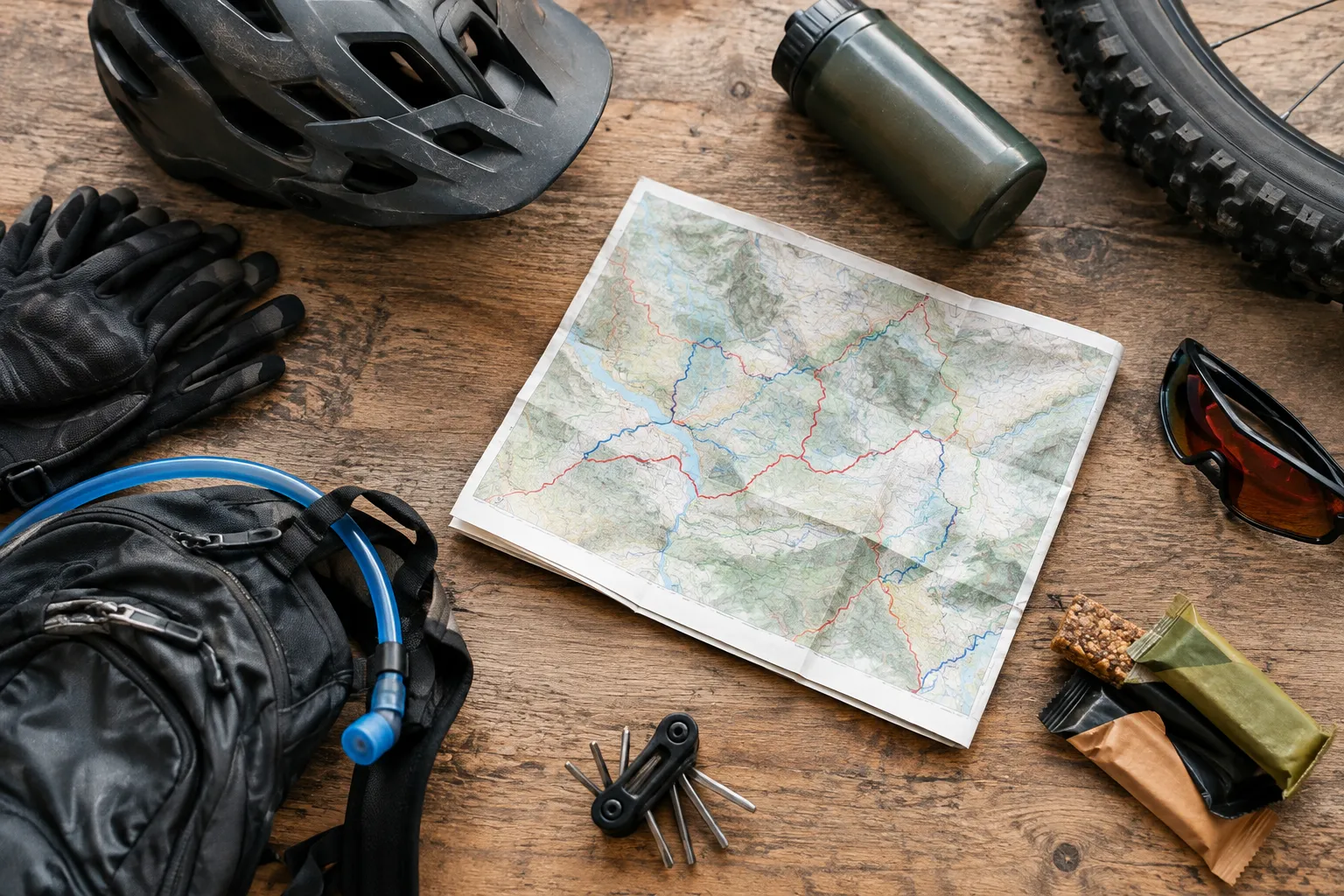
Trail difficulty is not one measurement: a route can be technically demanding, physically tiring or challenging because conditions make its features harder to manage.
On a downhill course, riders may need to maintain control over steep or uneven ground and make decisions quickly. On a longer route, accumulating effort can affect concentration and the ability to handle technical sections later in the ride. Those challenges overlap, but they are not interchangeable.
Exposure can also change how a trail feels. A rider may be comfortable with a technical feature in a contained setting but less comfortable when a mistake could have more serious consequences. That is a personal factor as well as a feature of the route.
Conditions matter because the same trail can ride differently when the surface is wet, loose or otherwise changed. Before deciding that a trail is within your ability, check current local information and consider whether the conditions match your experience. The FCDO’s Morocco travel safety advice also discusses hazards on mountain roads in poor weather, relevant to planning travel in the Atlas.
The practical decision criteria
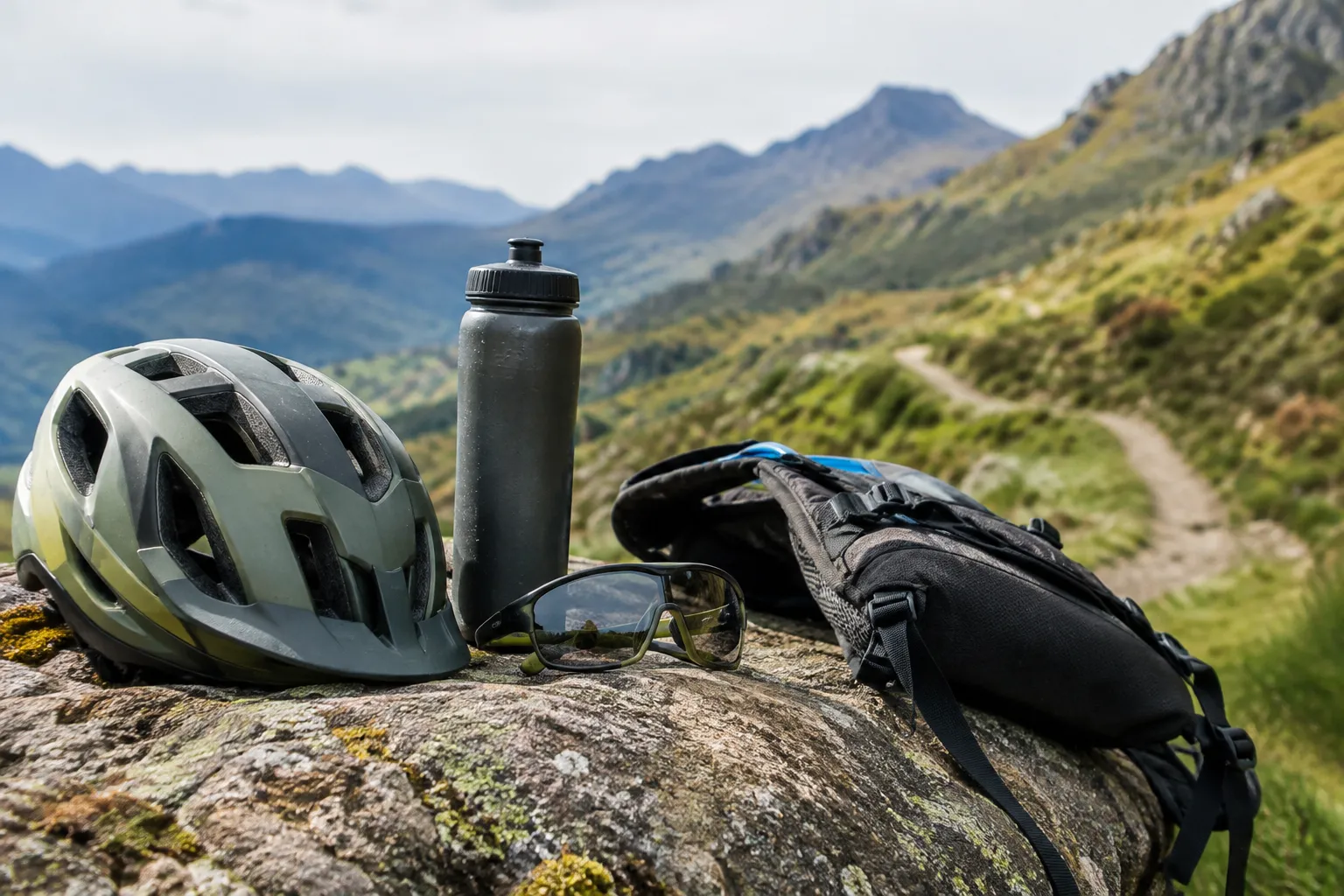
To assess whether a trail is suitable, compare its specific features with the kind of riding you have already handled, rather than relying on a difficulty label alone.
Check the route description for:
- The type of terrain and technical features described.
- How long the ride is and what the overall physical demand may be.
- Whether the route includes exposed sections or features that concern you.
- The conditions under which the description applies, and whether those conditions are likely on your ride.
- Whether there are easier route choices, ways to bypass features or points where you can stop.
Then compare those details with your own recent experience. Have you ridden similar terrain in similar conditions? Can you manage it while tired, not just on a short, familiar descent? If the answer is unclear, choose a route with options to adjust the challenge rather than treating a trail grade as a guarantee of suitability.
These criteria are relevant to Morocco as well as the UK. When considering mountain biking in the Atlas Mountains, ask how the route’s terrain, riding time and elevation compare with your experience. Atlas Mountain Bike offers guided mountain biking and e-bike adventures around Marrakech and the Atlas Mountains; the right format depends on the kind of riding and support you are seeking, not on a UK trail’s reputation.
Common mistakes to avoid
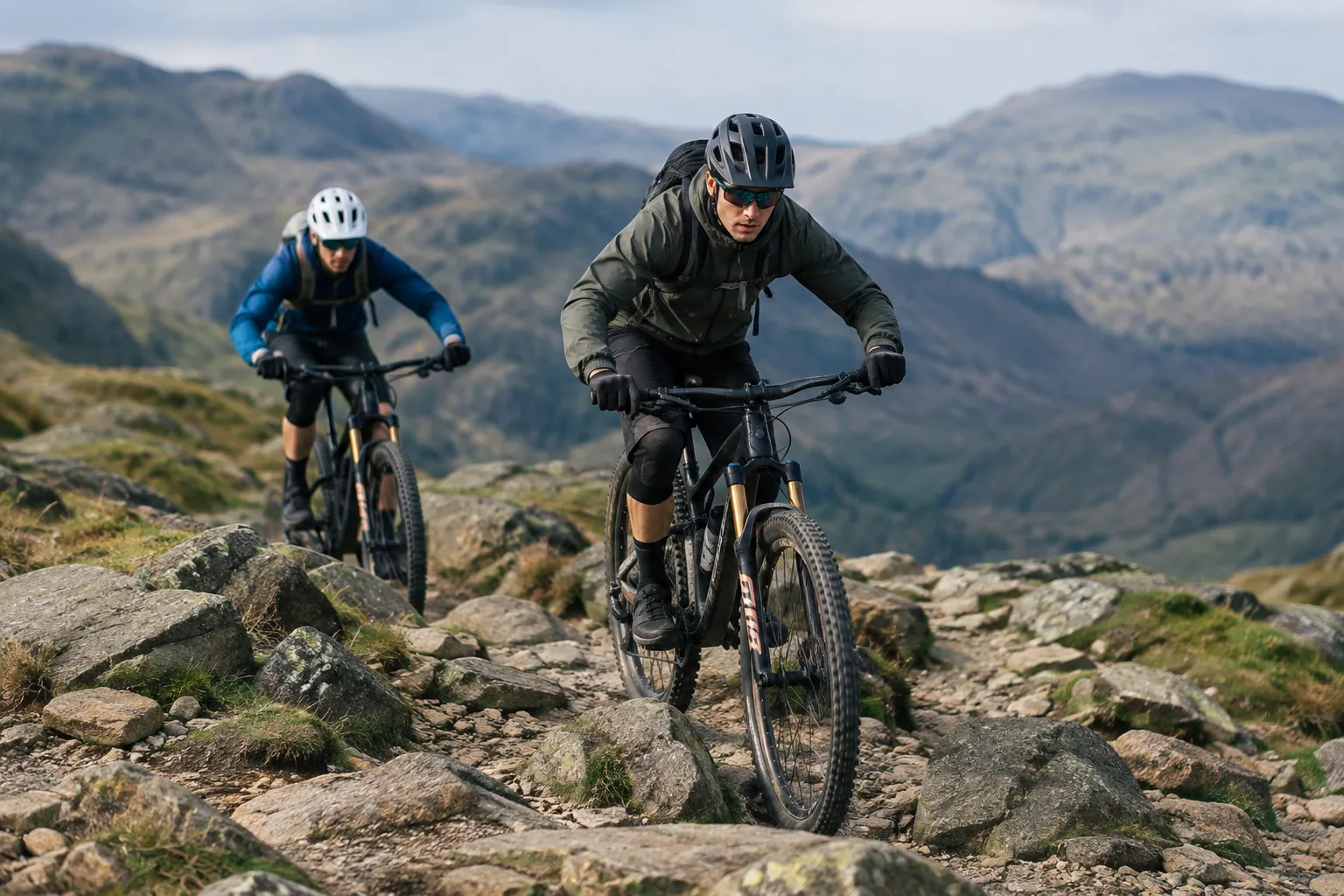
The most common assessment errors are treating a grade as a promise, confusing a short technical challenge with a demanding whole ride, and ignoring how conditions affect the trail.
A grade is a guide to the trail’s character, not a personal assessment of your ability. Riders differ in confidence, technique and fitness, and a route that feels manageable in dry conditions may feel quite different when the surface changes. Read the description alongside the conditions and your own experience.
It is also easy to focus on the hardest feature and overlook the rest of the ride. A short, difficult section may be the main technical test, while a long route can become demanding through accumulated effort. Ask whether the challenge is concentrated in particular features or sustained across the route.
Finally, do not assume that a difficult trail is automatically the right goal. If you are unsure about exposure or technical features, choose a route that lets you build experience before attempting them. For a high-mountain ride, check relevant local guidance and speak with a qualified professional about your own health or fitness concerns.
What is the hardest MTB trail in the UK in practice: how to apply it
Use the trail’s details, current conditions and your own experience together; that gives you a more useful suitability check than asking whether a trail is simply “the hardest”.
Start by defining what you want to test: technical descending, endurance, exposure or a combination. Then find a route description that explains those demands and check whether the current conditions could make them more challenging. If the description is vague, seek local guidance before committing.
For Fort William or any other downhill candidate, check the course’s current access arrangements and route information before planning a ride. A race course or well-known trail name does not, by itself, tell you whether it is open to your riding format or appropriate for your experience.
Apply the same process when comparing UK riding with a Morocco trip. UK trail grades do not describe Atlas terrain, and a demanding ride in one place does not automatically prepare you for every kind of route in another. Ask what the day involves, what riding format is offered, and how the route can be matched to your group’s ability. To explore the service context, see mountain biking in Morocco.
For a group, compare the route against the least experienced rider’s needs as well as the strongest rider’s ambitions. Agree in advance what the group will do if someone wants to avoid a feature or take a less demanding option. That makes the plan more practical than choosing a trail solely for its reputation.
Recommended next steps
Take these steps to decide whether a challenging trail—or a guided ride in a different mountain environment—fits your experience.
- Define whether you want to assess technical riding, endurance, exposure or a combination.
- Read the route description for terrain, physical demands, difficult features and alternative lines.
- Check current access and conditions with a reliable local source before travelling or setting out.
- Compare those demands with terrain you have ridden recently, including how you manage features when tired.
- Choose a route with options to adjust the challenge, and discuss individual health or fitness concerns with a qualified professional.