 28 Nov 2026
 8 min read
Many visitors travel in the Atlas Mountains, but whether it is safe to go depends on the route, season, weather and current local conditions. For mountain biking or walking, check access and forecasts, prepare for altitude and remote terrain, and seek local guidance when the route or conditions are unfamiliar.
Is it safe to visit the Atlas Mountains?
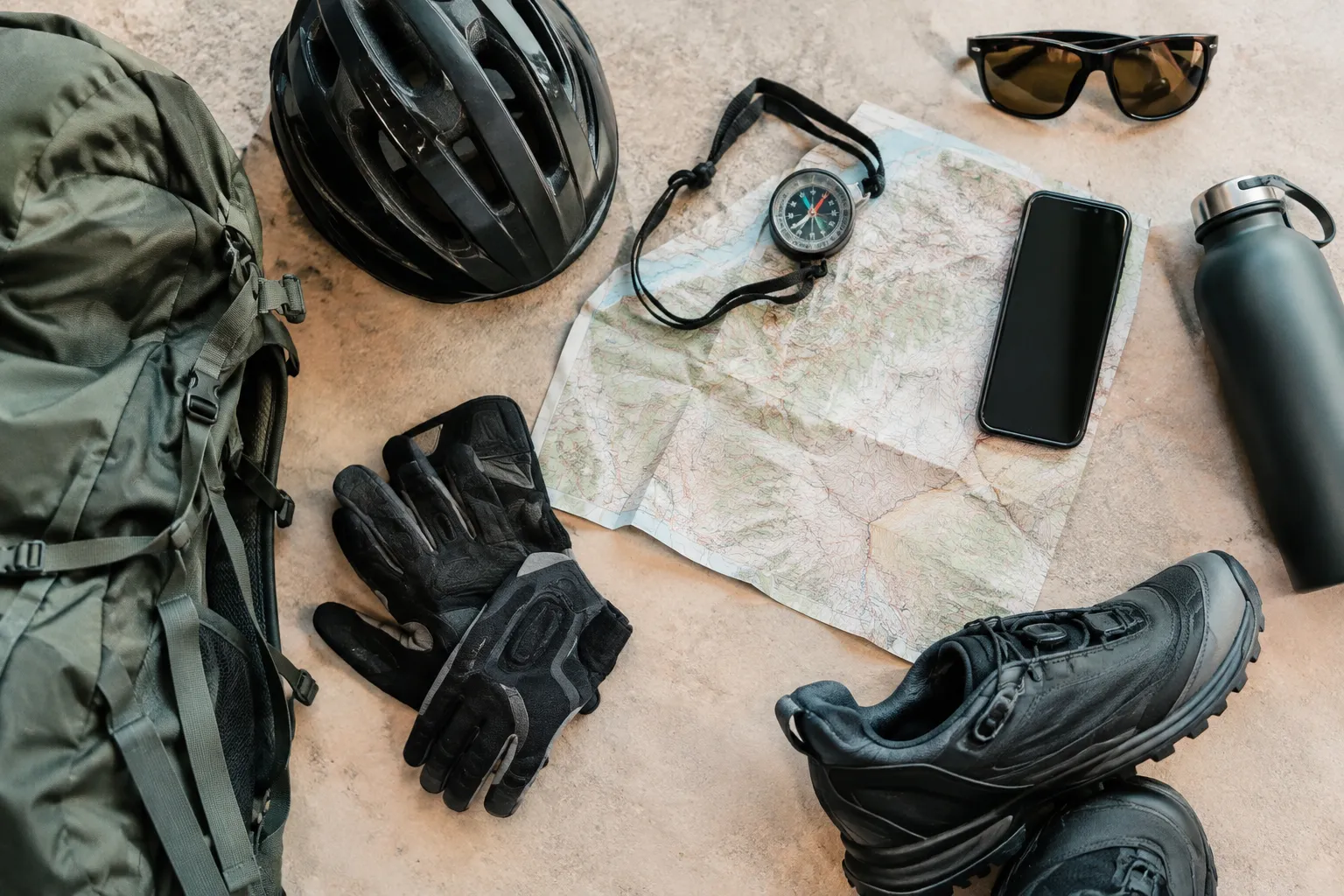
For many travellers, visiting the Atlas Mountains is a reasonable plan with careful preparation, but no single answer applies to every route or day. Roads, weather, elevation and access to help vary between places such as Imlil, the High Atlas and routes towards Toubkal.
For riders, “safe” also depends on how well a route matches your ability and what support is available. A familiar road ride is different from remote mountain biking in the Atlas Mountains, where rough surfaces, steep descents and limited access can make preparation more consequential. Do not assume a route is suitable simply because it appears on a map or another rider has completed it.
Season matters too: conditions on higher ground can differ from those around Marrakech. Use a route-specific forecast and current local information rather than relying on general expectations. For help deciding when to travel, see our guide to choosing a cycling season.

How road conditions and mountain weather affect your plans
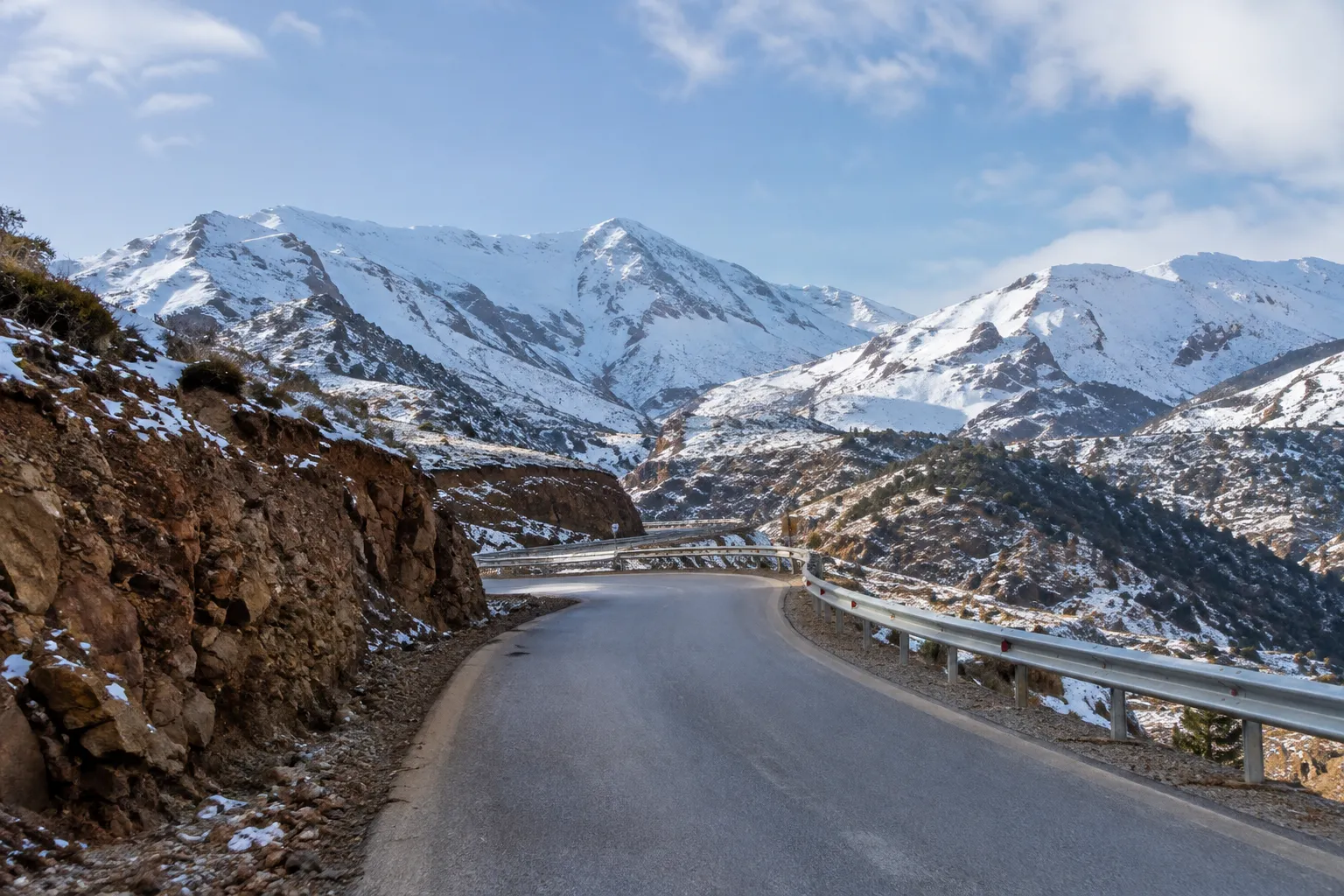
Travel plans in the Atlas Mountains should allow for changing road access and weather, especially on higher or more remote routes. Check conditions locally before setting out and be ready to change the plan if they are unsuitable.
Plan for mountain roads and local transport
Mountain roads can include narrow or uneven sections, and journeys may take longer than expected. The UK Foreign, Commonwealth & Development Office (FCDO) advises that mountain roads can be hazardous in poor weather. Read its advice on road hazards in Morocco and check the conditions for your route before departure.
Ask locally whether the intended road or trail is accessible and whether recent weather has affected it. If you are travelling by vehicle, consider whether the driver has experience on mountain roads and whether the transport is suitable for the planned route. Build flexibility into the day rather than relying on a tight connection or a fixed riding start time.
For atlas mountains cycling, transport is part of route planning: a ride may start or finish somewhere different from your accommodation, and the route may not offer easy alternatives if conditions change. Confirm where the group will meet, how the ride ends and what the plan is if access changes.
Check forecasts and prepare for changing weather
Conditions can shift with elevation and season, so check a forecast for the specific area and altitude rather than relying only on a forecast for Marrakech. Pack layers appropriate to the expected conditions, and reconsider the route if the forecast suggests that weather could make travel or riding unsafe.
The Met Office describes cooler, wetter winters and snowfall on higher ground in Morocco’s High Atlas. These broad regional patterns do not tell you what any particular trail will be like on a given day; a current local check still matters. Our Morocco cycling season guide can help with seasonal planning, but it is not a substitute for checking conditions before you go.
For mountain biking in the Atlas Mountains, weather can affect both the ride and the journey to it. If rain, snow or poor visibility changes the ground or road conditions, ask a knowledgeable local contact whether to alter the route, delay departure or choose another activity.
Prepare for altitude and remote routes
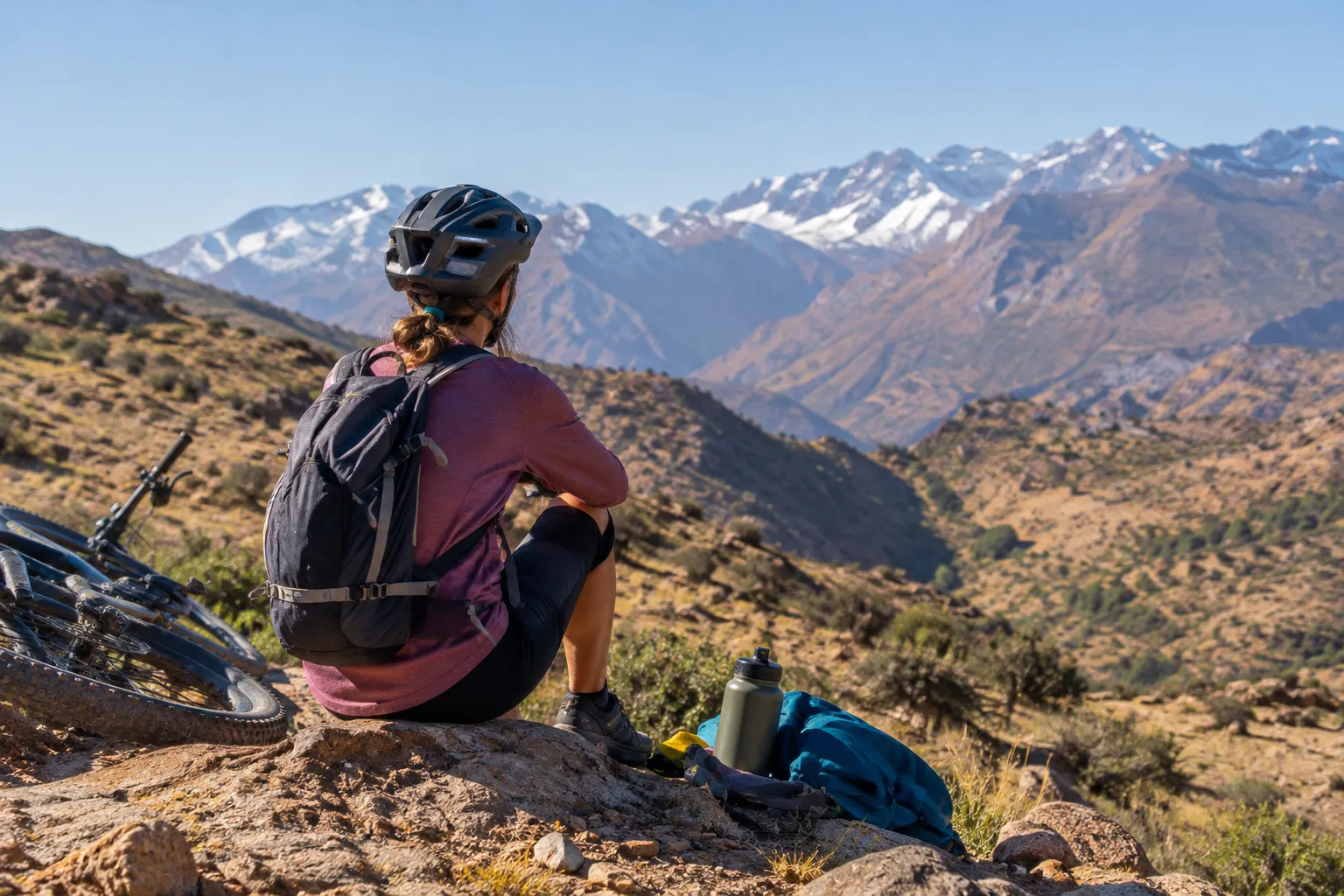
On higher or remote routes, manage exertion, carry essentials and make sure someone knows your plans. If you feel unwell or conditions are uncertain, stop and seek appropriate local advice rather than pressing on.
Give yourself time to adjust to altitude
Higher elevation can affect how you feel and how much effort a climb requires. Pace yourself, take breaks and avoid treating a demanding route as a test of willpower. If symptoms develop, do not continue upwards or riding simply to keep to a schedule.
The NHS explains altitude sickness, its symptoms and risk-reduction advice. Read this before a high-altitude trip, particularly if your plans include substantial elevation gain. Symptoms can overlap with other causes of feeling unwell, so this article is not a substitute for individual medical advice. Speak to a qualified health professional about your own circumstances before travel if altitude is a concern.
Plan for limited access and help on the route
Remote trails may be far from roads, shops or immediate assistance. Before setting out, check the route’s difficulty, expected duration, navigation requirements and access points. Carry water, food, weather-appropriate clothing and a way to navigate the planned route.
Share your itinerary and expected return time with someone who is not on the ride. Agree what they should do if you do not check in. Think through how you would contact help if a phone has no signal, and do not assume that you can rely on a mobile connection throughout a remote route.
For a ride, consider what happens if someone in the group has a mechanical problem, becomes tired or needs to stop. Establish a regrouping plan and make sure the group understands it before leaving. If you cannot explain how the route works or what you would do if plans change, get local guidance before starting.
Travel respectfully and check UK travel advice
UK visitors should check current official travel advice, insurance conditions and practical arrangements before departure, while following local guidance in villages and on routes. These checks help you plan for the trip you are actually taking rather than relying on assumptions.
Read the FCDO’s current Morocco travel advice before travelling, and revisit it close to departure. Check its guidance relevant to your itinerary, including road conditions, mountain activities and any current security information. Follow official advice if conditions or recommendations change.
Review your travel insurance policy for the activities you intend to do, including mountain biking or hiking, and check what it says about medical care and evacuation. Policies differ, so do not assume that cover for a general holiday automatically includes every activity or route.
In villages and rural areas, pay attention to local customs and follow guidance about access, clothing or photography. Ask before photographing people, respect signs and requests from residents, and do not ride through places where access is not permitted. These are practical ways to reduce misunderstandings and show consideration for the communities along a route.
Choose a suitable route and guide before you go
A route is a sensible choice only when its terrain, distance, elevation and support fit the people taking part and the conditions on the day. If you are uncertain about access or difficulty, ask a knowledgeable local guide before booking or setting out.
Match the route to your experience
Compare more than a route name or total distance. Ask about elevation gain, surface, steepness, technical sections and how much of the route is remote. A short route can still be demanding if it includes sustained climbing or difficult ground; distance alone is not a reliable measure of difficulty.
For a group, choose around the range of experience and fitness in the party, not only the strongest rider. Discuss what happens if someone needs to stop or take a different pace. If the group includes younger or older riders, or people with limited experience on rough terrain, confirm that the route and available support are suitable for them rather than assuming they will manage.
Riders comparing formats should also think about the terrain they want to cover. MTB, e-bike and gravel trips can involve different surfaces and levels of effort; a gravel route is not automatically an easier option. Our guide to gravel riding in the Atlas Mountains explains what to consider when deciding whether that riding style matches your plans.
Ask a guide about conditions and support
Before booking or starting a ride, ask who will lead it, how the route is chosen and what happens if weather or access changes. For mountain biking in the Atlas Mountains, also clarify the expected terrain and difficulty, what support is available during the ride, and how the group will handle a mechanical problem or a rider who cannot continue.
A useful answer should make the plan clear enough for you to judge whether it fits your group. Ask how the route will be adapted to different abilities and what information the guide needs about your experience. If you are travelling with a group, agree on these points together so that everyone understands the level of challenge and the arrangements.
Atlas Mountain Bike offers guided mountain biking and e-bike adventures centred on Marrakech and the Atlas Mountains, including multi-day trips and day rides. If you are comparing guided options, check the route details and support arrangements for the specific trip rather than assuming all tours cover the same terrain or provide the same plan.
Atlas Mountains Safety FAQ
The answers below give practical starting points, but current official advice and local conditions should guide decisions for a particular trip. Check them again as your travel date approaches.
Is Morocco safe to travel to now?
Check the FCDO’s current Morocco travel advice before departure, because guidance and local conditions can change. For an Atlas Mountains visit, also check route access, weather and transport locally.
Can you stay in the Atlas Mountains?
Yes, travellers can plan overnight stays in the Atlas Mountains, but available accommodation and access depend on the specific destination and itinerary. Confirm the location, transport and arrangements before setting out.
Do you need a guide to hike in the Atlas Mountains?
Not every walk requires a guide, but local guidance is prudent on unfamiliar, remote or demanding routes, or when conditions are uncertain. Check the route, access and current advice before deciding.
Recommended next steps
To decide whether to plan a visit, work through these checks in order and revise the itinerary if the route, weather or support arrangements do not fit your group.
- Check the FCDO’s current Morocco advice and note any guidance relevant to your route.
- Choose the area and activity, then compare route distance, elevation, surface and access with your group’s experience.
- Check a route-specific forecast and ask locally about road, trail and weather conditions before departure.
- Review your insurance policy for the activities and locations in your itinerary, and consult a qualified health professional about personal altitude concerns.
- Confirm transport, navigation, water, supplies, check-in arrangements and a plan for changing or ending the route early.